
Author
Ricky Linex
Ricky Linex retired in 2021 as a wildlife biologist for the Natural Resources Conservation Service and now works as a range and wildlife consultant.

December 2025 | By Ricky Linex
Author
Ricky Linex retired in 2021 as a wildlife biologist for the Natural Resources Conservation Service and now works as a range and wildlife consultant.
This month’s Range Plants subject is a teller of tales. By that I mean this grass is an indicator for those who are in the know. By its nature it prefers to grow in wet areas, which might be on the banks or floodplain of a beautiful creek or river, or it might even be in the bar ditch alongside a busy highway.
We can also say that bushy bluestem is a facultative wet species meaning that 66 to 99 percent of the time you will see it in riparian or wetland areas, but up to a third of the time it can be found in the uplands. Here is where the knowledge of where bushy bluestem grows can prevent you from getting into a bit of trouble. Since we know it likes to grow where it will have wet roots in wet soil, if you see bushy bluestem growing in the uplands don’t try driving over to it because you will likely become stuck in the mud. If it is growing in the uplands there is likely a rock ledge or clay layer forming a perched water table that will have water on or near the soil surface making growth of bushy bluestem probable, and a trap for most vehicles a certainty.
Bushy bluestem, Andropogon glomeratus, is an erect tufted perennial that grows from 2 to 5 feet in height. New growth is a light green color while last year’s growth is a reddish-brown to bronze. The color now in December is the reddish-bronze. Each plant has several stems that are flattened near the base with profuse branching and rebranching in the seedhead. Thus, the seedheads look broom-like. Upper leaf blades grow 6 to 10 inches, sometimes longer, while the lower or basal leaves approach 24 inches in length. All leaf blades are about 3/8-inch wide. Leaves are normally flat, sometimes rolling under when dry, and can be hairy on upper side near base. Sheaths are flattened, overlapping and rough. The seed head can grow to 2 feet in length and is crowded and silky in appearance.
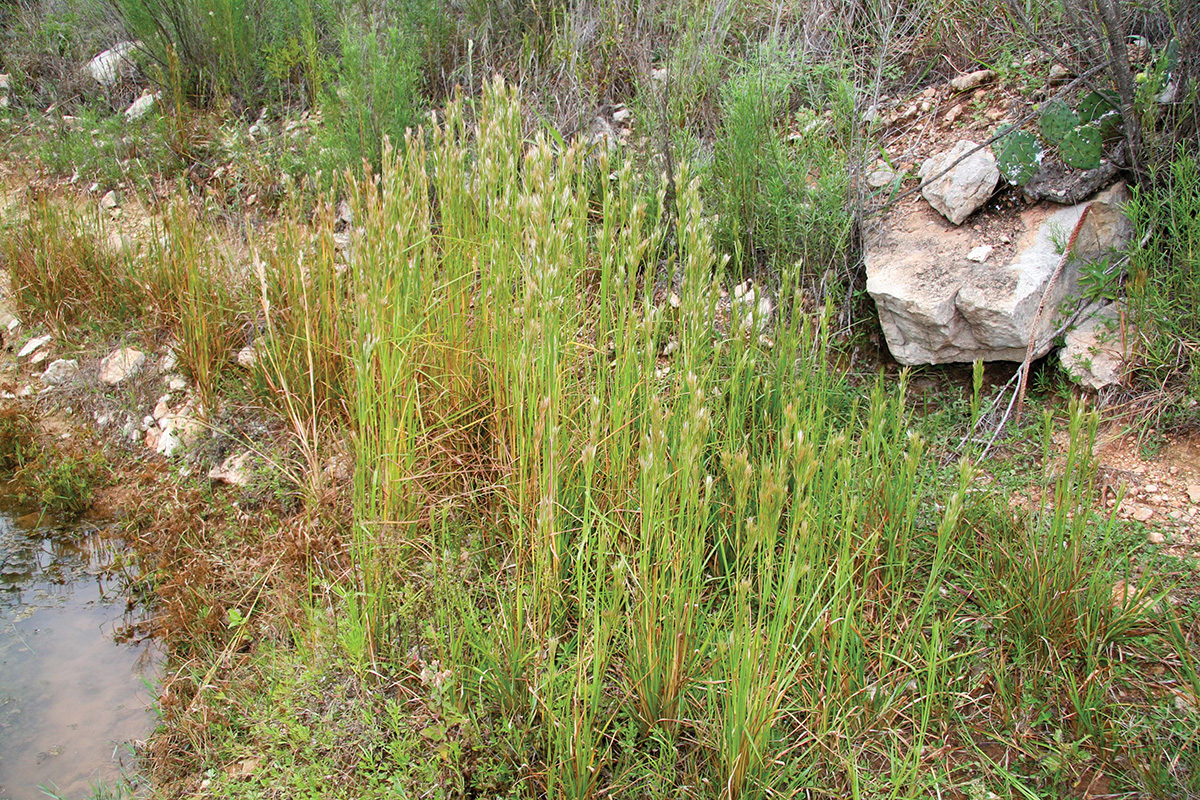
Bushy bluestem doing the job of creekbank stabilizer on any creek in Texas.
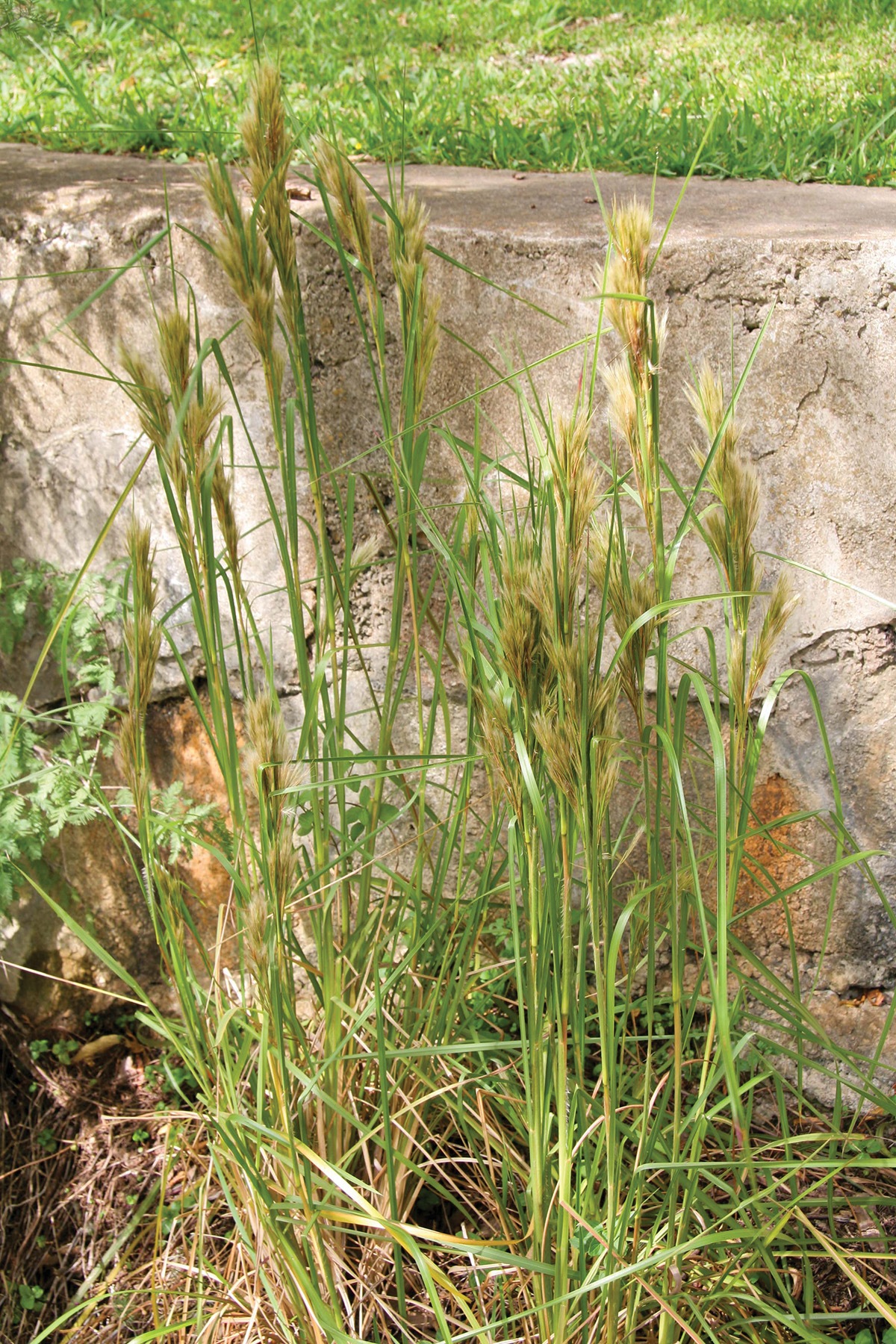
Bush bluestem can add a splash of bronze color to a native plant garden.
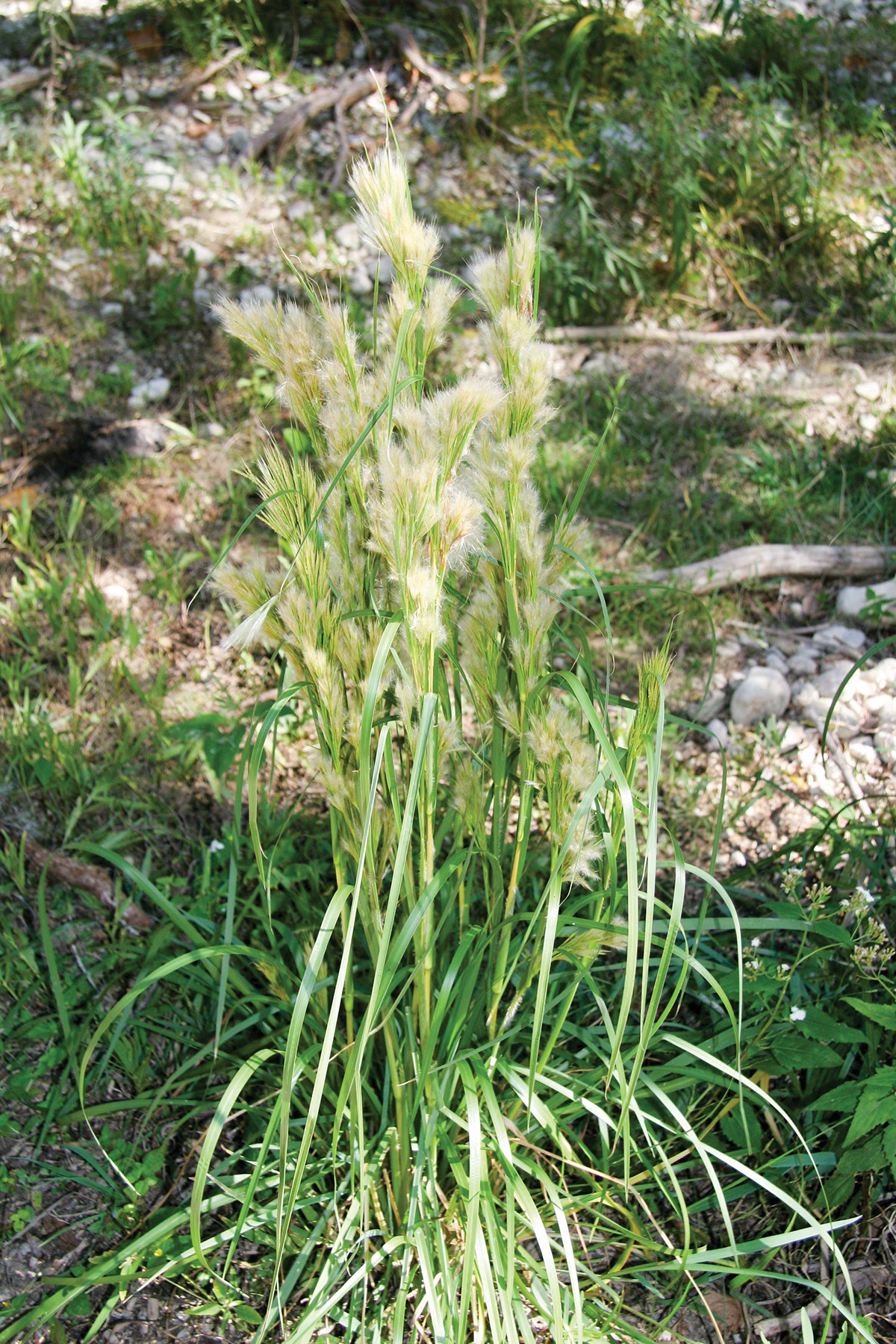
In early fall the green color of the stems and leaves gives way to the reddish-brown color it carries well into winter.
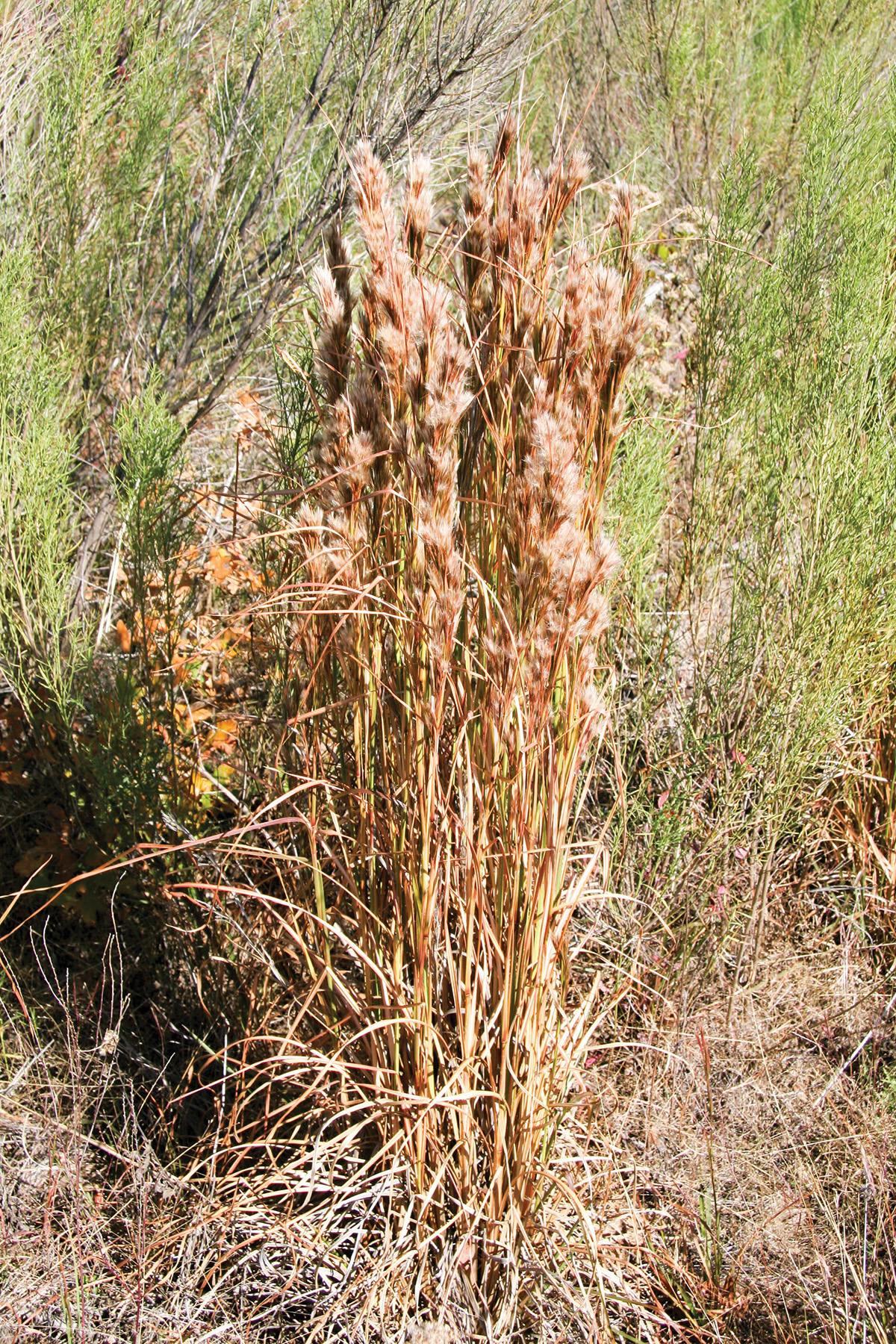
Early maturing plant seen in October preparing for winter dormancy.
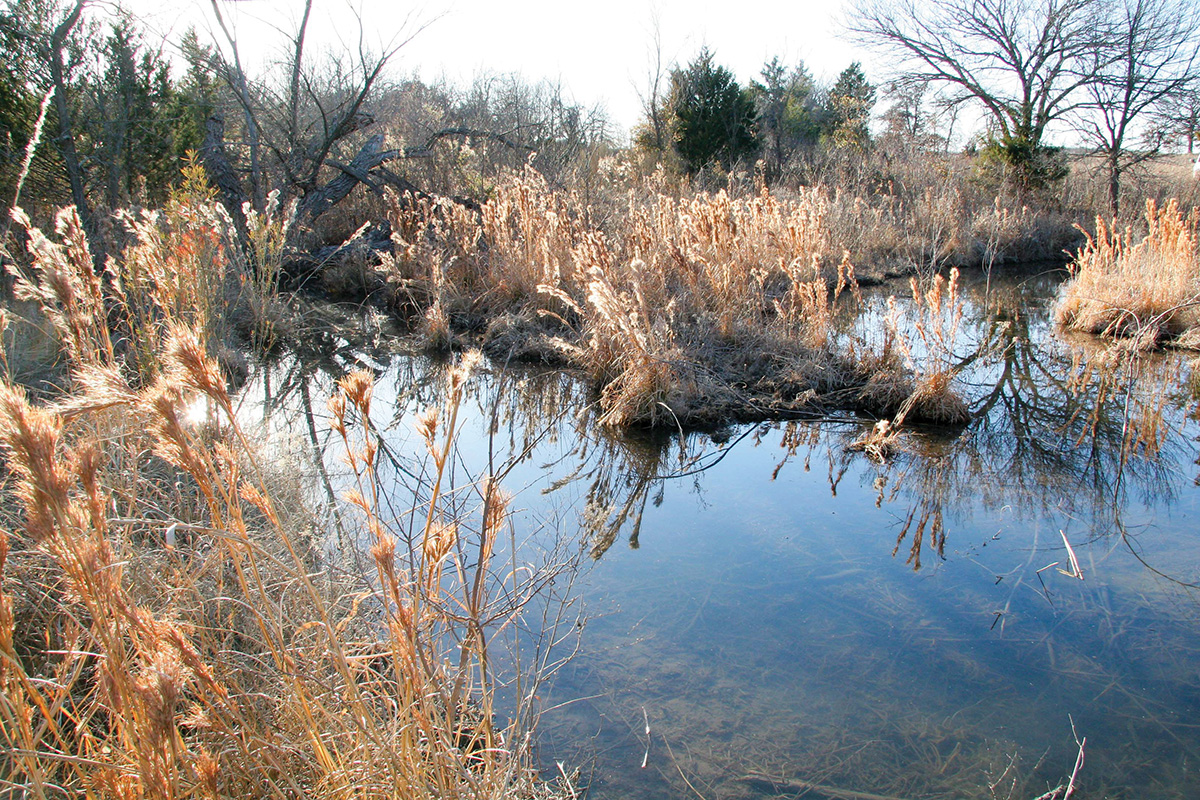
Late January on a North Texas creek bushy bluestem shines in the early morning sun.
Bushy bluestem is a prolific seed producer; seeds will spread in the wind or be carried by the water of the creek allowing for effective natural seeding of riparian areas. Seedheads develop between September and November of each year.
Bushy bluestem provides fair quality forage to cattle, low quality for sheep and goats, poor forage for deer, and poor seed value for game and songbirds. This grass grows in dense stands making travel difficult for quail and turkey poults. Bushy bluestem grows in all vegetative regions of Texas though it is less often seen in the High Plains region.
Bushy bluestem is often seen along creeks and riparian areas and other moist to wet sites. Once again, a word to the wise is that the presence of this plant will often give away the location of a seep or spring on dry upland sites. It has value as a stabilizing plant in riparian areas where it is able to withstand minor flooding and stabilize creek banks. Known as an early stabilizer, bushy bluestem provides protection on fresh sand and gravel bars until stronger plants can get established.
While it provides fair quality early grazing for cattle, this grass should be appreciated for where its real value lies, which is helping to hold the world together, one creek bank at a time. Not all plants are created equal but all plants have a purpose if we understand how to read the land.